ME/CFS and hEDS/HSD: the overlap, and what it’s actually like to live with both

If you live with both hypermobile Ehlers-Danlos syndrome (hEDS) or hypermobility spectrum disorder (HSD) and myalgic encephalomyelitis/chronic fatigue syndrome (ME/CFS), you’re not an outlier.

Hypermobility shows up in a large share of people with ME/CFS, and researchers have proposed that the two conditions share underlying biology (inflammation that may damage connective tissue and worsen hypermobility) rather than just coincidentally overlapping (1).

Doctors miss the connection often enough that many people carry one diagnosis for years before anyone checks for the other (2).

This post looks at what the research says, why the overlap gets missed, and what it’s actually like to live with both, in the words of people in The Zebra Club, our community for those living with hEDS, HSD, and chronic pain.

Key Takeaways

  • Joint hypermobility shows up in up to 30 to 57% of people with ME/CFS, far more than in the general population.
  • Researchers think inflammation may be a shared mechanism, not just a coincidence, linking the two conditions.
  • The overlap gets missed often: many people carry one diagnosis for years before anyone checks for the other.
  • If you have both, hypermobility work and PEM pacing can seem to pull in different directions, but a nervous-system-first, start-small approach can hold both at once.

What is ME/CFS?

Myalgic encephalomyelitis/chronic fatigue syndrome (ME/CFS) is a chronic illness defined by four things: profound fatigue that isn’t relieved by rest, post-exertional malaise (PEM), unrefreshing sleep, and either cognitive impairment and/or orthostatic intolerance(3).

PEM is the cardinal symptom, meaning it’s required for diagnosis (though the other features above have to be present too). It is defined as a delayed, disproportionate worsening of symptoms after physical, cognitive, or emotional exertion.

It’s the reason “just push through it” advice, common for almost every other kind of tiredness, can make ME/CFS significantly worse rather than better. (For the full breakdown of what PEM is and how it differs from ordinary fatigue, see What is Post Exertional Malaise (PEM)?)

Symptom severity varies widely from person to person. Some people are still able to work, though rarely without real difficulty, while others are housebound or bedridden(4).

Symptoms also tend to be cyclic rather than constant, with better days mixed in among worse ones, which means how someone is doing on any single day doesn’t tell you much about how they’re doing overall.

Researchers have documented physical changes in ME/CFS that show up on tests, not just symptoms people report: things like reduced blood flow to the brain, immune cells that behave differently than they should, and cells that struggle to produce enough energy (1, 4). It’s a physical illness, not a mental one, and the research increasingly shows this.

A note on naming

You’ll see the name written a few different ways. “ME,” “CFS,” and “ME/CFS” get used somewhat interchangeably, though ME (myalgic encephalomyelitis) is the more precise term for the neuroimmune illness, while “chronic fatigue syndrome” has at times been used more loosely. Most current research and patient organizations use “ME/CFS” to cover both.

How much overlap is there between ME/CFS and hEDS/HSD?

Hypermobility turns up far more often in ME/CFS than in the general population. A 2024 review found joint hypermobility in up to 30 to 57% of people with ME/CFS, fibromyalgia, POTS, and Long COVID, compared with 10 to 20% in the general population (1).

A registry study of 815 people with ME/CFS found that those with joint hypermobility were significantly more likely to also report EDS and POTS, and scored worse on quality of life measures for pain and physical functioning than those without hypermobility (5).

Want the deeper research on why these conditions overlap biologically? We’ve covered the inflammation and connective tissue mechanisms in detail here: [ME/CFS, EDS & Long COVID: The Inflammation Connection].

Why does this connection get missed?

Part of the answer is that the two conditions can look similar from the outside. Chronic pain, fatigue, and dysautonomia show up in both, so a clinician who isn’t specifically screening for hypermobility may land on an ME/CFS diagnosis and stop there.

The Ehlers-Danlos Society states plainly that doctors can misdiagnose someone with ME/CFS when hEDS or HSD is the underlying condition, and that some people carrying an ME/CFS diagnosis likely have unidentified hEDS or HSD underneath it (2).

The numbers back this up. In a 2021 study of 63 people with fibromyalgia and/or ME/CFS, 81% met Brighton criteria for joint hypermobility syndrome, yet only 23.5% of those found to have symptomatic hypermobility had ever received a hypermobility diagnosis before the study evaluated them (6).

The registry study mentioned above found something similar: people with ME/CFS and joint hypermobility were significantly more likely to also carry a family history of EDS, a hereditary pattern that often goes unrecognized until someone specifically looks for it (5).

If you’ve spent years with one diagnosis and only recently connected the dots to the other, you’re in very good company.

What members of The Zebra Club say it’s actually like

Research tells you how common this overlap is and some of the biology behind it. It doesn’t tell you what it’s actually like to live with both. We asked members with both ME/CFS and hEDS or HSD to describe it in their own words.

R explains ME/CFS this way:

“I describe ME/CFS as an ever present, constant tiredness that isn’t helped with rest. While most people have unlimited possibilities when they wake up, I need to be aware of my energy capacity, and how many tasks I’ll be able to do with that, on any given day.”

JM describes the same idea in more concrete, daily terms, budgeting a fixed and often small amount of energy across a day and a week:

“My battery runs out and goes flat if I don’t pace myself well enough. When I’m exhausted I can’t do anything but rest/sleep. I need to schedule in a sleep every afternoon to get through the day. I might only have a 30% of battery each day to start with. I only have so many spoons of energy in a day and one week and have to plan how I use them. I need a rest after for example meeting a friend for a cuppa for 90 mins and that’s all I can manage that day. I couldn’t then go for a walk or go shopping that day as well.”

That budgeting isn’t optional. Go over the limit, and PEM follows.

“If I go over that limit, post-exertional malaise (PEM) will occur. Even a ‘minor’ task can trigger PEM. And it’s not just from ‘too much’ physical activity, but also from mental and social activity, and stress. For me it feels like not only will the car ignition not start, there’s also no fuel in the tank.”

J describes a PEM flare in physical terms, and notes something specific to living with both conditions at once: hEDS symptoms flaring right alongside the PEM itself.

“If I go over my energy capacity, I feel sick later. That can include intense flu-like symptoms, brain fog, increased bodywide pain, and often my EDS will flare alongside and my joints will all get looser.”

R describes something similar during a crash: worsened pain, and other conditions getting harder to manage too, with no way to predict how long it will last.

“With a PEM flare I experience flu-like symptoms, extreme exhaustion, and dramatically increased pain levels. It also makes symptoms of other conditions worse. You also have no way to know if it’ll last a few days or if it’ll go on for weeks.”

JM’s description adds another layer worth sitting with: the loss of independence a flare can bring, and the emotional toll that comes with it.

“It can feel like a deep body exhaustion and severe pain. Needing lots more rest than usual if not resting constantly, maybe in bed. Not knowing when it will end. Effects my emotions, causes stress. I lose more independence with doing daily tasks, having to rely on my husband more. Have to cancel more plans if not all of them depending how bad the flare is.”

Between J and R, a pattern shows up independently in both accounts: PEM and hypermobility symptoms don’t stay in separate lanes. When one flares, the other often does too. It’s a pattern other Zebra Club members have described too, in a fatigue crash even outside a formal ME/CFS diagnosis.

As one member put it: “like the battery isn’t just empty but dead.” (More member voices on fatigue and crashes are in [Managing Fatigue and Its Impacts].)

J also points out something worth sitting with: no two people’s ME/CFS looks the same.

“People with ME/CFS have really widely varying experiences, so something that is hard for one person, might not be hard for another. Some people find it difficult to have a social life after work. Some people struggle with work. Some people are homebound. Some people must stay only in the dark and can’t open their eyes or talk. All are ME/CFS and all are difficult for the person experiencing them.”

Woman doing a seated forward stretch on a mat while following an online class.

When exercising for hypermobility and pacing for PEM seem to pull in different directions

Here’s the tension that’s specific to having both conditions. Hypermobility management often calls for strengthening and stability work around unstable joints. ME/CFS calls for minimizing exertion to avoid PEM.

Those two instructions can seem to contradict each other, and figuring out how to hold both at once is one of the harder parts of managing this combination.

There’s no single correct starting point. What we’ve found works, and what The Integral Movement Method (IMM) is built around, is starting far smaller than feels necessary, and building trust with your own body’s response before adding anything.

J’s approach shows what that looks like in practice, not as a general principle, but as an actual system:

“For TZC, evaluate your capacity carefully and play around to find a starting place that will not give you PEM. Because everyone’s capacity is different there’s no correct starting place for ME/CFS… I need to stick only to movement snacks, and only certain ones which are safe for me. I do them most days and wait at least a week before I add something new, an added rep of a movement or a new movement. I also generally require myself to be at baseline (not in a crash) for three days in a row before changing my routine. I combine meditation, breathing, and movement snacks daily. It’s a very slow way to progress, but it’s what I can do.”

That pace, a week between changes, three consecutive baseline days before adjusting anything, isn’t overly cautious. For a body where overdoing it can mean days or weeks of setback, it’s what sustainable can actually look like.

R found something unexpected in applying The Zebra Club’s existing approach to ME/CFS specifically:

“Thankfully, I think a lot of ME/CFS awareness is already built in to Zebra Club movement. It was a huge relief realising all the movement prompts I try to remember were already included in the lessons: go slow, listen to your body, don’t push through, and that rest and relaxation are also just as important.”

This is where the IMM’s nervous-system-first approach matters most. IMM starts with regulating the nervous system and building proprioception and stability before adding load, never with a fixed program of increasing exertion.

That framing works whether the limiting factor is joint instability, PEM, or both at once. And on a day when the body says no, the right answer can be rest, breathing, or a single movement snack. That’s not falling behind. That’s the plan working.

For a full walkthrough of pacing strategy and more member insight, see [How to Pace with EDS and Hypermobility: A Gentle Guide from the Community].

Living with ME/CFS and hEDS or HSD, and looking for a movement approach built around both? The Zebra Club’s classes are designed to work with PEM, not against it, so you can move at whatever pace your body has today.


Works Cited

  1. Ganesh R, Munipalli B. Long COVID and hypermobility spectrum disorders have shared pathophysiology. Front Neurol. 2024;15:1455498.
  2. Ehlers-Danlos Society. Chronic Fatigue in Ehlers-Danlos Syndrome Hypermobile Type and Hypermobility Spectrum Disorder (for Non-experts).
  3. Institute of Medicine (National Academy of Medicine). Beyond Myalgic Encephalomyelitis/Chronic Fatigue Syndrome: Redefining an Illness. Washington, DC: The National Academies Press; 2015.
  4. Komaroff AL, Lipkin WI. ME/CFS and Long COVID share similar symptoms and biological abnormalities: road map to the literature. Front Med. 2023;10:1187163.
  5. Mudie K, Ramiller A, Whittaker S, Phillips LE. Do people with ME/CFS and joint hypermobility represent a disease subgroup? An analysis using registry data. Front Neurol. 2024;15:1324879.
  6. Eccles JA, Thompson B, Themelis K, et al. Beyond bones: The relevance of variants of connective tissue (hypermobility) to fibromyalgia, ME/CFS and controversies surrounding diagnostic classification: an observational study. Clin Med. 2021;21(1):53-8.

Living with Myopathic Ehlers-Danlos Syndrome: Finding Community Beyond a Diagnosis 

Myopathic EDS (mEDS) is an ultra-rare EDS subtype, caused by variants in the COL12A1 gene, that combines muscle weakness with joint hypermobility and progressive contractures.

Diagnosis often comes late, since its features don’t fit the more familiar hypermobile EDS pattern most people expect.

When I was first diagnosed with Ehlers-Danlos syndrome in 2020, I assumed I had the type most people have heard of: hypermobile EDS.

It wasn’t until a couple of years later in 2022, after genetic testing, that I learned I have myopathic Ehlers-Danlos syndrome (mEDS), an ultra-rare subtype caused by a variant in the COL12A1 gene. 

Receiving a genetic diagnosis was validating. For the first time, there was an explanation for symptoms that never seemed to fit neatly into the “hypermobility” box. But it also came with an unexpected realization: very few people had the same diagnosis. 

When there are only a small number of documented cases worldwide, finding someone who shares your experience becomes difficult. There aren’t large online communities discussing life with mEDS, and many healthcare providers aren’t familiar with the rarer forms of Ehlers-Danlos syndrome.

Instead of feeling like I’d found my community, I felt more alone. 

Key Takeaways

  • Myopathic EDS (mEDS) is caused by variants in the COL12A1 gene and is estimated to affect roughly 1 in 1,000,000 people, compared to hypermobile EDS at approximately 1 in 500.
  • mEDS combines features not typically seen together: early-onset muscle weakness, joint hypermobility, progressive joint contractures, soft doughy skin, and atrophic scarring.
  • Because mEDS is under-recognized, accurate diagnosis often requires ongoing self-advocacy with healthcare providers.
  • Community and support don’t require sharing the exact same diagnosis. Shared experience within The Zebra Club has been central to Ashley’s sense of belonging.

What Makes Myopathic EDS Different? 

Myopathic Ehlers-Danlos syndrome is a rare subtype of Ehlers-Danlos syndrome and is caused by variants in the COL12A1 gene, which provides instructions for making type XII collagen. Unlike many inherited disorders, mEDS can follow either an autosomal dominant or autosomal recessive inheritance pattern, depending on the specific genetic variant.

The recessive form generally causes more severe symptoms beginning at birth, while the dominant form often presents during childhood or young adulthood with milder symptoms. 

One of the defining features of mEDS is that it combines characteristics people don’t usually expect to see together. Individuals often experience congenital or early-onset muscle weakness, delayed motor development, joint hypermobility, and progressive joint contractures (the tightening of muscles and surrounding tissues that limits range of motion).

Soft, doughy skin and atrophic scarring are also common. Some individuals develop pectus excavatum (the inversion of the sternum), and emerging research has identified a possible association between mEDS and Chiari I malformation

Woman doing a figure-4 stretch lying on her back on a yoga mat

Living Between Similarities and Differences 

Like many people with hypermobile EDS, I experience chronic pain, fatigue, autonomic dysfunction, gastrointestinal issues, and the daily challenges that come with a connective tissue disorder. In many ways, our experiences overlap. 

But muscle weakness has always been one of the defining features of my life. As a child, activities that seemed effortless for other kids required tremendous effort. I simply couldn’t make my legs run the way everyone else’s could.

Looking back now, those experiences make much more sense knowing that muscle weakness is considered one of the hallmark features of my subtype. 

As I’ve gotten older, another difference has become more apparent. While hypermobility has always been part of my story, I’m gradually becoming less flexible. Instead, I’m developing joint contractures, particularly in my knees and back. I no longer meet all of the Beighton score criteria, which can be confusing for healthcare providers who aren’t familiar with myopathic EDS. 

Living with mEDS often leaves me asking questions that don’t have clear answers: Is this a general EDS symptom? Is this a myopathic EDS symptom? Or is it simply my body? 

Navigating a Rare Disease 

One of the most surprising aspects of living with myopathic EDS isn’t simply that it’s rare—it’s that rarity can easily be overlooked.

Hypermobile EDS is by far the most common subtype of Ehlers-Danlos syndrome, estimated to affect approximately 1 in 500 people, while myopathic EDS is estimated to affect roughly 1 in 1,000,000. Because of that, many healthcare providers understandably have much more experience with hypermobile EDS than with the rarer genetic subtypes. 

Even after receiving molecular confirmation of my diagnosis, I’ve had providers change my medical record back to “hypermobile EDS.” I’ve learned to carefully review visit notes, request corrections, and advocate for my diagnosis to be documented accurately.

Living with a rare disease often means becoming an educator as much as a patient. 

It also means accepting that many questions don’t yet have answers. There are no large studies to guide treatment, few specialists have firsthand experience with mEDS, and research is still evolving.

While that uncertainty can be frustrating, it has also connected me with the broader rare disease community—people who understand what it feels like to live in the spaces where medicine is still learning. 

Woman in quadruped position on a yoga mat outdoors

Finding Community in The Zebra Club 

In the same year I was diagnosed with mEDS, I found The Zebra Club. The Zebra Club has helped me realize that many of the challenges I face- learning to pace instead of pushing through, understanding the importance of nervous system regulation, grieving changing abilities, and adapting movement to meet my body’s needs…are experiences shared across many forms of EDS.

My diagnosis may be rare, but the challenges of adapting to an unpredictable body are ones I share with countless people across the EDS community. 

Practically, it’s changed the way I care for my body. Because joint contractures are part of my subtype, maintaining safe mobility is especially important. The education I’ve received through The Zebra Club has helped me approach stretching more intentionally, strengthen safely, and view movement as something that nourishes my body rather than something I have to force. 

Just as importantly, it has given me a sense of belonging. Opening The Zebra Club platform often feels like coming home. It’s a place filled with people who understand the unpredictability of living with a connective tissue disorder, who celebrate each other’s victories, and who genuinely care when someone is struggling. 

Looking Forward 

Because myopathic Ehlers-Danlos syndrome is so rare, I hope future research continues to expand our understanding of the condition. Every new publication, every newly identified patient, and every piece of emerging data helps paint a clearer picture for those of us living with mEDS. 

But while science continues to catch up, I’ve realized something important. When I first learned how rare my diagnosis was, I assumed that meant I would always feel isolated. Instead, I’ve discovered that community isn’t built on sharing the same genetic variant. It’s built on shared experiences, mutual understanding, and people who remind you that you’re not navigating this journey alone. 

Does Movement Therapy Work for EDS and Hypermobility? 3 Real Member Stories

Many people with hypermobile Ehlers-Danlos syndrome (hEDS) or hypermobility spectrum disorder (HSD) arrive at movement therapy after years of trying everything possible to address pain and instability.

Standard physical therapy may have helped some of the time, but not consistently, and is often not adapted for bodies with symptomatic hypermobility.

At The Zebra Club, we take a different approach using the Integral Movement Method — a movement therapy approach developed by Jeannie Di Bon after more than 17 years of working with hypermobile clients and rehabbing her own hypermobile body.

Movement therapy for hEDS and HSD works best when it starts slow, calms the nervous system before building strength, and adapts to a body that already moves too far. Three Zebra Club members share what changed when they tried that approach after years of standard physical therapy.

Key takeaways

  • All three members tried traditional physical therapy first, in one case for over two years, before finding lasting relief.
  • The shared turning point was slowing down, not pushing harder.
  • Walking distance increased dramatically in two of the three stories: 10 metres to 2.5km, and one block to 3 miles a day.
  • Community support mattered as much as the exercises themselves.
  • Change took months, not days, in every story.

 Ian: from 10 metres to 2.5 kilometres

Before Ian joined The Zebra Club he could barely walk 10 metres from his bedroom to his bathroom without holding onto the walls in pain. After building up one rep at a time, he now walks 2.5km, works part-time, and has come off long-term pain medication.
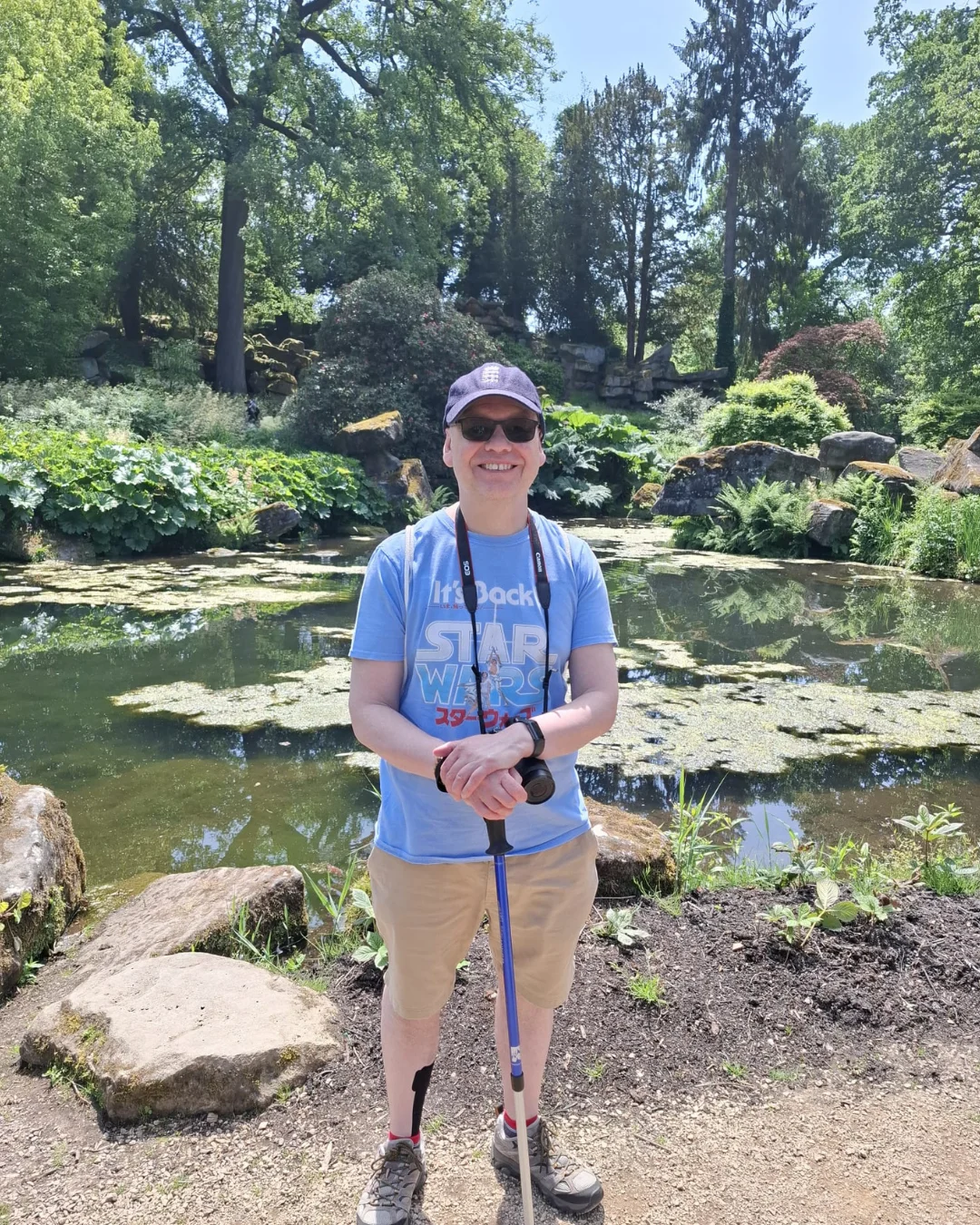
A man stands in front of a garden and pond smiling and holding a walking stick
Ian, Zebra Club member

Before, in his words:

“Walking the 10 metres from bedroom to bathroom (no stairs) was taking a number of minutes, holding onto the walls, almost in tears from pain. I felt at times that the whole of my left side was giving up on me.”

After, in his words:

“First, with every step I was in pain, but this has greatly reduced; I can walk around about 2.5km (1.5 miles). I’ve carried on working part-time.”

Read Ian’s full story →

Tanya: from one block to 3 miles a day

Before The Zebra Club, Tanya couldn’t walk more than one block or carry her own groceries, after two and a half years moving between physical therapists with no improvement. She now walks 3 miles a day and no longer takes medication for sleep or POTS.

A woman smiles at the camera with a mountain range behind her
Tanya, Zebra Club member

Before, in her words:

“I was only able to walk about one block before my symptoms became much worse. I was not able to carry groceries, push a shopping cart, or put away groceries.”

After, in her words:

“I am now able to walk 3 miles every day or longer if I want to. I am able to be up all day without needing to lie down to rest. I can cook a full meal, wash dishes, and still go for a walk after dinner with no symptoms.”

Read Tanya’s full story →

Christy: from a weekly pain list to none

Christy had already spent two years working one-on-one with an EDS and POTS-aware physical therapist before joining The Zebra Club, and was still managing a weekly list of pain. A year in, she sometimes arrives at appointments with nothing on that list at all.

A woman with purple hair standing in front of a painting of an octopus
Christy, Zebra Club member

Before, in her words:

“Before I joined The Zebra Club, I had been working in-person with an EDS and POTS specialized Physical Therapist for two years. So, I was in a good starting place. I’d made progress and ‘graduated’ from their program, but I still had pain and flaring.”

After, in her words:

“Since joining The Zebra Club a year ago, that list of pain has gotten a lot smaller, and lately, sometimes I walk in to see my chiropractor or massage therapist and I don’t have any list at all! It’s a bizarre and wonderful thing.”

“I came for the exercise, but I stayed for the people.”

Read Christy’s full story →

What these three stories have in common

Three people, with different starting points, but their stories tell some common patterns.

All three tried conventional physical therapy first

Ian saw around 20 physiotherapists before joining The Zebra Club. Tanya worked with four different physical therapists over two and a half years. Christy had already graduated from a two-year one-on-one program with an EDS and POTS-aware physical therapist and was still working from a weekly pain list when she found us.

The shift happened when they took a different approach to movement

Slower, fewer reps, rest counting as part of the plan, not failure.

Ian described his version of “slow and low” as lying on his mat, trying to relax and let go of tension. Tanya spent her first weeks doing meditations to calm her nervous system before attempting any movement. Christy’s turning point was a shoulder stability class where she realised, after two years of one-on-one physiotherapy, that she had never learned which muscles she was supposed to be engaging.

Change took time

For Ian, it took three months just to complete one class at full reps. Tanya was doing a couple of videos a week at the start. Christy spent her first months in the pain management section of the platform.

None of our members describes a single breakthrough moment. The change accumulated.

All three credit the community as part of what made the difference

Ian had never used social media before joining. Christy described it as something like finding a family reunion of biological relatives after a lifetime of not knowing they existed. Tanya found hope and company at a point when her world felt like it was getting smaller.

How to start movement therapy safely with hEDS or HSD

These three members also shared very similar advice that they learned through their IMM journey in The Zebra Club.

Begin with the nervous system, not the muscles

The classes and the pathways all start with breath and relaxation before movement. For many of us, when we have spent years in pain or going from flare to flare, this is what makes the difference. The exercises can wait until your nervous system is ready for them.

It’s ok to start with one rep

Ian spent three months building to full reps on a single class. That is not a slow start; that is the correct start for what his hypermobile body needed for recovery after years of compensating with the wrong muscles.

Christy noticed visible muscle definition before she had ever completed a challenging class at full intensity. The body adapts on its own schedule, and no two schedules are the same.

Use the community when you are unsure

All three members describe asking questions in the community as a turning point. Ian was embarrassed to ask. He did it anyway and describes it as one of the most useful things he did.

The Zebra Club has more than 3,000 members worldwide managing hEDS, HSD, POTS, MCAS, and related conditions. Someone has asked your question before.

Recovery is not linear

Every story here includes the reality of life with chronic illness. That is part of the process, not evidence the process is not working. Life happens. The flares become fewer and further between.

If you want to find out whether this approach works for your body, join The Zebra Club here.