

The early signs of hEDS (hypermobile Ehlers-Danlos syndrome) and HSD (hypermobility spectrum disorder) often show up in childhood as joint instability, unexplained bruising, chronic fatigue, and pain dismissed as growing pains.
These patterns come up again and again in childhood stories from The Zebra Club members.
You’re not the only one who was the “bendy kid.” You’re not the only one who was called clumsy or dramatic, or who was just tired all the time and never got a real answer why.
Inside The Zebra Club community, we asked our members what life with hEDS or HSD was really like in childhood, and the signs they now look back on and recognize as symptomatic hypermobility.
Here’s what they told us.
What Zebra Club members shared about growing up with hEDS and HSD (and EDS)
1. Bendy fingers, party tricks, moves other kids couldn’t do
Hyperextending fingers, touching your head with your feet, contorting your hands in ways that made friends wince: our members remember these as party tricks, long before anyone called it joint hypermobility.
“You could do tricks with your finger joints, contort your lips in opposite directions as a child.” – Emily
“Could and still can touch my head with my feet, from in front. Could do it from the back, contortion style.” – Anonymous
“Crossing my index and middle fingers across the rest of my fingers without assistance from the other hand was another hand trick.” – Emily
2. On a first name basis with the school nurse
Frequent illness and injury at school felt like bad luck at the time. Looking back, our members see it differently.
“You’re on a first-name basis with the school nurse.” – Anonymous
“People tend to roll their eyes when you’re hurt or sick yet again.” – Anonymous
“I would get really sick and catch everything that was going around and had Strep throat/ear infections, and sinusitis too many times to count.” – Alison
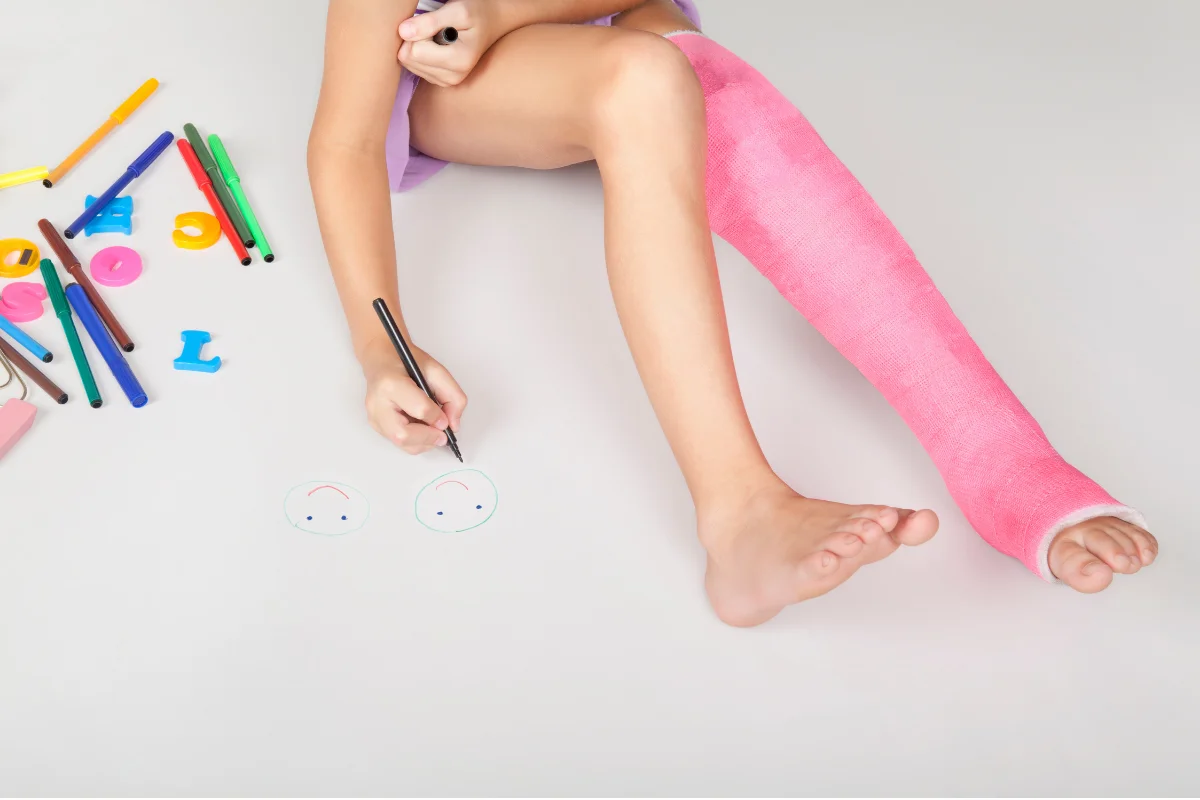
3. Growing up in braces, supports, and splints
Needing braces, splints, or supports well before adolescence is something many Zebra Club members remember from early childhood.
“When getting ready for a sports game, you have so many joint braces you’re nicknamed ‘The Bionic Girl’.” – BendyChristy
“I had to wear braces on both of my knees and ankles in order to play sports.” – Anonymous
“Looking at old photographs, I notice I’m leaning into things or people a lot, seeking support to stand upright or sit without a backrest.” – Anne-Claire
4. Joints that clicked, cracked, and popped through childhood
Joints that click, crack, and pop with ordinary movement is a common experience many of our members remember from childhood.
“Your shoulders cracked so often and so loudly that you got in trouble for it when you raised your hand in school.” – Clarose
“Your knee has been noisy since childhood. You were always told noises don’t matter, but you weren’t buying it.” – Emily
5. Trophies and casts in equal measure
Flexibility can be a real advantage in sports built around range of motion, while the same joint instability makes coordination and endurance sports much harder.
“You can accomplish unusual feats in sports, but are always injured. Your trophies are only outnumbered by your casts and braces.” – Anonymous
“Being really good at some PE things and really bad at others.” – Lucy
“Very clumsy and can’t fathom how people play team sports that involve coordination.” – Kstewbloom
“Kicking myself in the nose with my knee during a dance class when the teacher said to kick as high and hard as we could.” – Devon
6. Pencil grip and handwriting nobody could read
Hyperextending finger and wrist joints makes gripping a pencil painful and hard to control, something that often gets mistaken for careless handwriting.
“English teacher ripped my homework in front of everyone when I was a teenager as my handwriting was that bad.” – Lucy
“Your handwriting was so terrible in 3rd grade the teacher sent you home for the summer w/ practice worksheets. In reality you just needed a fat pencil grip.” – Emily
“Terrible handwriting and quick fatigue. My hand tends to do its own thing when writing.” – Mischa
7. Flexibility that went further than most
Extreme flexibility can look impressive from the outside, but for some it comes with instability, fatigue, or pain that being “bendy” alone doesn’t explain.
“I could put my feet easily behind my head or touch my head with my feet. I could turn my feet out very much so it scared people.” – Lucy
“Could and still can touch my head with my feet, from in front. Could do it from the back, contortion style.” – Anonymous
“You could kick the back of your own head.” – Caroline G
8. Bruised with no explanation, again and again
Bruising easily, with marks appearing from everyday knocks, is something many Zebra Club members recall from childhood.
“Would have big bruises without any cause, and would be abnormally swollen and red when I hit myself into things (which happened often).” – Anonymous
“Lots of ‘mystery’ bruises and skin would cut and bleed easily.” – Anonymous
“I had so many unexplained bruises on my legs, and still do!” – Katie
“And the bruises… so many bruises and blisters, I was teased for being so ‘delicate’ without anyone considering why this might be.” – Caroline
9. Pain that was brushed off as growing pains for years
Persistent pain in childhood is often dismissed as growing pains, even when it’s severe enough to interrupt sleep and daily life.
“Your mum regularly told you you sounded like an old woman because you were always complaining of being in pain in various places (which no one did anything about).” – Caroline G
“Excruciating ‘growing pains’ for years.” – Jan
“‘Growing’ pains so bad that I begged to be carried and could hardly walk, couldn’t sleep.” – Anonymous

10. Twelve hours of sleep and still exhausted
Fatigue that sleep doesn’t fix is one of the most common experiences our members describe from childhood.
“Being tired a lot also comes to mind.” – Anne-Claire
“Falling asleep in class.” – Lucy
“Constant exhaustion that was blown off.” – Jan
“As a teenager, I had significant fatigue. I could sleep 12+ hours a day and still be tired.” – Bethany
“Never feeling rested and always having a hard time getting out of bed even as a child as I believe I always had chronic fatigue to some degree.” – Allison
11. Skin that had a mind of it’s own
Skin differences, from stretch marks to reactive rashes, come up often in what our members shared about childhood.
“Lots of stretch marks.” – Joanna
“Stretch marks at age 16.” – Anonymous
“Always highly reactive to any bites or stings, rashes, allergies, sensitivity, etc.” – Mischa
“As a toddler my legs were always covered in hives. The doctor said it was just eczema and I’d grow out of it. The rashes were so bad that other moms were afraid to let me play with their kids because they thought I had something contagious. So my mom put me in tights to cover it up. I wore tights every day even throughout the hot summer months.” – Bethany
“You had rashes & sometimes even hives on top of hives on top of hives. Your skin was so sensitive you had to wear all cotton. Metal grommets for buttons couldn’t touch your skin nor could elastic or your skin would react painfully.” – Emily
12. Tripping, bumping, and a body that didn’t cooperate
Frequent trips, bumps, and falls often come down to proprioception, the body’s sense of where it is in space, being less reliable when connective tissue is altered.
“Looking back I was really clumsy. I had x shaped legs, so I had the talent to trip over my own feet. I also bumped into things frequently and could just miss the table trying to put something on it.” – Anne-Claire
“My early life reads like a list of reports from the accident book: Fell off a washing line when I was 3. Walked into a shop counter when I was 5. Walked through a plate glass window at 13.” – Joanna
“As a child I was very clumsy. So clumsy my parents would joke that it was a good thing they didn’t name me ‘grace.’ So clumsy that my grandpa called me a literal bull in the china shop.” – Bethany
“Always losing balance when walking due to ankle rolling and lack of proprioception, but I just thought I was clumsy.” – Emily
“Running into walls all the time.” – Mischa
13. Joints that slipped out and back in, over and over
Joints slipping, subluxating, or dislocating during ordinary movement is one of the clearest signs of instability, even when it happens often enough to feel routine.
“When I was little, my parents would swing me by my arms between them for fun, but because of my joint instability, my wrists and shoulders would often slip out of place.” – Anonymous
“Repeated ER visits for dislocated elbow.” – Jan
“I would twist my ankle far and get it back as if nothing happened.” – Anonymous
“Could click one hip in and out.” – Joanna
“Subluxed my patella every sports season from puberty until I graduated and somehow doctors never questioned why.” – theguth20
“Showing up at school on crutches with a sprained ankle and then running around without them in the afternoon when everything ‘magically’ felt better because it went back into place.” – Devon

14. Pretzel legs, W-sitting, and chairs that never felt right
Unconventional sitting positions, like W-sitting or pretzel legs, are often the body finding what’s actually comfortable when a joint is seeking proprioceptive feedback or the body is accommodating dysautonomia.
“Sitting in very strange positions in class.” – Lucy
“HATING sitting on my bum or with feet flat on the floor — lots of pretzel positions.” – Anonymous
“W sitting, not crawling (I didn’t even shuffle, I just sat).” – Laura
15. Struggling with things that looked easy for everyone else
Everyday tasks like throwing a ball or carrying a bag can take real concentration and effort when coordination and joint stability aren’t a given.
“Problems with cycling, ball games, especially throwing balls, carrying bags or instruments, holding instruments.” – Lucy
“I had proprioception issues that I now realize were from having hEDS. I could not get myself to do any movement head-first. No diving into water, no forward rolls, no cartwheels, and overall nothing that might be called ‘gymnastics.'” – Amber
“I definitely had impaired proprioception early on as well and felt clumsy but also had a hard time throwing a ball, mind you the winged scapula didn’t help, but also had difficulty catching a ball.” – Allison
“Painful fingers when pushing buttons (hyperextending).” – Jan
“Incapable of catching and throwing balls. All sports that involved a ball were nearly impossible.” – Helene
16. Crawling, walking, and hitting milestones out of order
Developmental milestones can arrive early, late, or out of the usual order, something many hypermobile children experience.
“Didn’t crawl, but scooted and didn’t walk until 18 months.” – Mischa
“My son never crawled, always bum shuffled — used as part of his autism diagnosis — he walked independently at 15 months and ran a week later!” – Sam48
“Forget crawling or bum shuffling. I was walking at 9 months old ” – Wabbittumshie
17. The flip side: never needing help with your own zipper
Extreme range of motion has a practical upside too: some tasks feel effortless even when others are a real struggle.
“You can go to the beach to sunbathe by yourself because you can apply sunscreen on your own back.” – Janinekits
“Able to zip up my own dresses.” – Anonymous
“Truly didn’t understand why anyone needed a backscratcher tool!” – Mischa
18. Dizzy every time you stood up too fast
Dizziness or lightheadedness on standing came up again and again in what our members shared, often dismissed as nothing unusual at the time, later linked to autonomic nervous system dysfunction.
“Your entire life you had been dizzy standing up, & figured it was normal.” – Emily
“Fainting on occasion.” – Lucy
“Blacking out and almost fainting while gardening or cleaning in the summer.” – Anonymous
“I would get very, very easily dizzy and motion sick at random times, not just carsick.” – Anonymous
“Feeling like I was going to pass out in hot showers or hot tubs.” – Laura
19. Stomach pain that sent you home from school
Digestive difficulties, from stomach pain to constipation, are a recognised part of the connective tissue disorder picture for many people.
“Frequently sent home from infant/junior school with abdominal pain.” – Joanna
“Bloated and sore tummies (so impressed my mum could spell diarrhoea in my sick notes without looking it up).” – Wabbittumshie
“ER trips for constipation as a child.” – Anonymous
20. Knowing more about pain medication than most adults do
Needing pain medication at an age when most children don’t is a sign the pain was real, even when it went untreated for years.
“You started taking adult ibuprofen at age 9 yrs old for migraines.” – Emily
“Then as a teen the heavy/painful periods having to get prescription meds for pain and having to take birth control for the heavy periods.” – Allison
“As a teenager, my family used to tease me about having more doctors’ phone numbers than boys’ phone numbers in my phone.” – Devon
21. Never quite comfortable, hot or cold
Struggling to regulate temperature, running too hot or too cold, is a common but often overlooked experience.
“Cold intolerance — I couldn’t be in a pool because I’d start shivering.” – Anonymous
“Heat intolerance — overheating easily and getting cold easily likely due to dysautonomia.” – Allison
22. Breathing that never felt quite right
Breathing that feels restricted or effortful, without a clear cause, comes up more often than people might expect.
“Feeling as if my lungs fill up really quickly and I can’t get enough air.” – Anonymous
“Pneumonia and childhood bronchitis.” – Joanna
23. Symptoms dismissed as laziness or drama
Symptoms being dismissed as laziness, weight, or anxiety is one of the most consistent and painful themes in these stories.
“Assuming I was just weaker and lazier than others because I struggled to exercise, breathe, and stand/sit upright.” – Anonymous
“Bullied by teachers for: bad handwriting, lack of proprioceptive/motor skills, ‘being lazy’, daydreaming.” – Lucy
“As a young adult, I didn’t realize so many of my symptoms weren’t normal until I started to see doctors when I was older for the various symptoms they called things sprains, strains, or work stress.” – Bethany
“Pain was blamed on my weight or growing pains.” – KillinMeSmolls
24. Arms overhead, and suddenly out of breath
Tasks that require the arms above heart level can be surprisingly hard, sometimes even causing breathlessness or dizziness.
“Not being able to do things with my hands if they were above the level of my heart or reaching over my head. I couldn’t work out why I was so good at crafts but then so rubbish at doing my own hair.” – Caroline
“Oh my goodness! This! I couldn’t breathe if my hands were above my head!” – Laura
“Is this why I get out of breath and dizzy trying to braid my own hair?” – Celia
More signs our community recognizes
Moving more slowly than others:
“I was known for generally being slow.” – Lucy
“Slowness. To a point it became a characteristic.” – Helene
Exercise and activities that ended in injury:
“Injured doing kickboxing so I stopped.” – Helen
“I studied karate. If I could go back in time and not do those stretches.” – Kathleen
Being described as floppy as a baby:
“At birth the doctor described me as having floppy joints but then nothing was said about that again.” – Cathy
Pelvic floor and connective tissue challenges:
“Hernias when I was only 28. Pelvic prolapse at 40.” – R
“Bladder and bowel prolapses in my late 30s.” – P
Bladder pain and recurring infections:
“A lot of bladder pain and UTIs from childhood on.” – H

Why we’re sharing this
We built The Zebra Club because so many of our members spent years, sometimes decades, not knowing why their body worked differently. Community is often the first place people finally hear “me too.”
If you recognized yourself in even a few of these, we’d love for you to be part of the conversation. Members share stories like these every week, along with movement support built specifically for hEDS and HSD through Jeannie Di Bon’s Integral Movement Method.