

Were you the bendy, “double-jointed” kid? Maybe you were able to do party tricks or had no problems reaching all the positions in yoga class. Now, as an adult, you’ve come across a video listing the signs of hypermobility and found yourself wondering, “Am I hypermobile?”. Or maybe you have started having pain and wonder if that bendiness was normal.
Flexibility and joint hypermobility aren’t the same thing, and neither is bad on their own. Hypermobility can even be an asset.
However, when this hypermobility is accompanied by chronic pain, instability, and more widespread symptoms, you may want to consider hypermobility spectrum disorder (HSD), hypermobile Ehlers-Danlos syndrome (hEDS), or another type of connective tissue condition worth raising with a clinician.
Here in The Zebra Club, where members learn to move using The Integral Movement Method (IMM), many of us spent years wondering whether our bendiness was “normal” before getting answers.
Key Takeaways
- Flexibility is the range of motion your soft tissues allow at a joint. Joint hypermobility is when joints move beyond the typical range, often because of inherited differences in connective tissue.
- Hypermobility isn’t bad on its own. Most people with hypermobile joints never develop symptoms, and the extra range can be an asset.
- When hypermobility comes with chronic pain, instability, or symptoms across the body, it may point to HSD, hEDS, or another heritable connective tissue disorder that a clinician can assess.
- You can be hypermobile and still feel stiff, because muscles often tense up to protect joints that move too easily.
- The Integral Movement Method focuses on stability and control rather than more range, and you don’t need a diagnosis to join The Zebra Club.
Hypermobility vs. Flexibility: The Short Version
Flexibility is the range of motion allowed at the joint; this depends on muscles, tendons, and other soft tissue (1). It can vary from person to person and can change with activity like stretching, dance, and yoga, while inactivity can reduce it.
Hypermobility, on the other hand, is when joints move beyond the typical range of motion (2). Hypermobility is often inherited, as a trait that runs in families or as part of a heritable condition, though it can also come from injury or training (2,3).
So the difference between hypermobility and normal flexibility isn’t only how far someone can bend, but it’s where that range of motion comes from.
Most people with joint hypermobility never develop symptoms (3). What matters for your health is if the hypermobility is accompanied by pain, instability, or other symptoms (2).
Flexibility vs. asymptomatic and symptomatic joint hypermobility
Sources: 1, 2, 3
Flexibility and hypermobility can also overlap. Jeannie explains why in a breakdown of the difference between flexibility and hypermobility, including why stretching more isn’t the answer for hypermobile joints.
You can be flexible without being hypermobile, and you can be hypermobile without being flexible, or you can be both hypermobile AND flexible.
“Hyperflexible,” “Double-Jointed,” and Other Words for Bendy
“Hyperflexible”, “bendy,” and “double-jointed” are colloquial terms to describe joints that bend further than most. “Double-jointed is misleading; it doesn’t mean you actually have extra joints, just that they move further than most.
The term that researchers and clinicians use is joint hypermobility (2). You may also see the term joint laxity or ligamentous laxity, which is often used interchangeably, though some researchers draw a distinction (3). If many joints throughout your body are hypermobile, you may see the term generalized joint hypermobility (Castori 2017).
Hyperflexibility vs. hypermobility: Hyperflexibility isn’t a medical term with a standard definition, so people use it to loosely mean someone who is very bendy. Hypermobility is a more specific clinical definition, referring to joints that move beyond the normal limits, which can be measured against typical range of motion (1,2)
When speaking with a clinician, describing joints that move further than they should and the symptoms that come with it gives them something to assess rather than saying “I’ve always been double-jointed.”
Is Hypermobility Bad?
Joint hypermobility by itself is a trait, not a diagnosis, and by itself is not a bad thing. In fact, it can be an asset.
If being bendy was something you were proud of, that is great! That range can be really beneficial, particularly in performing arts like dance, gymnastics, in musicians, or in activities like yoga.
Learning that there is a name for hypermobility doesn’t mean your body was “wrong”. Perhaps it just adds some context, and for many of us, that context does matter when symptoms come along with it.
That’s where the terms symptomatic hypermobility and asymptomatic hypermobility come into play. As defined by the 2017 international framework for hypermobility (2), asymptomatic hypermobility means your joints move beyond a typical range, but that does not cause problems. Symptomatic hypermobility describes just that – the extra range comes with like instability, pain, or recurring injuries (2,3).
Hypermobility may be problematic if it is impacting how you feel and move through your day. This could look like:
- Chronic joint pain (more than 3 months) or pain that keeps coming back or won’t settle
- Joints that feel unstable or give way, or slip partially out of place (subluxate) or even fully out of place (dislocate)
- Frequent sprains, strains, or other soft tissue injuries
For some people, symptoms are not limited to the joints but impact multiple systems in the body. This is when the hypermobility may be a sign of a broader connective tissue condition.

When Hypermobility Comes With a Connective Tissue Disorder
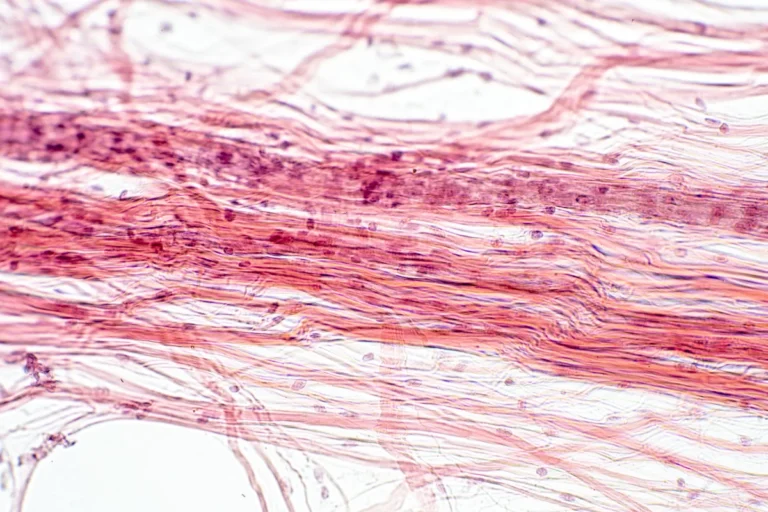
Sometimes hypermobility is one visible sign of a broader connective tissue disorder. Connective tissue connects, supports, and binds the tissues and structures throughout your body. It also helps move waste and nutrients, store fat, and repair damaged tissues (4).
It is made primarily of extracellular matrix, which is composed of protein fibers (including collagen) and a gel-like substance, with relatively few cells (4).
Because it is found throughout the body, when there is a difference in how it is built, it can show up in many systems of the body at once.
Connective tissue disorders can be autoimmune, like lupus or Sjogren’s disease. Or they can be inherited, like Ehlers-Danlos Syndrome.
- Ehlers-Danlos Syndrome (EDS): A group of rare heritable connective tissue disorders. There are 13 types according to the 2017 classification, and every type except hEDS is confirmed with genetic testing. Rarer types include vascular EDS (vEDS), classical EDS (cEDS), and the even rarer forms like myopathic EDS (mEDS).
- Hypermobile EDS (hEDS): The most common type, accounting for around 90% of EDS cases. hEDS is diagnosed clinically, as no gene has been identified yet (5,6).
- Marfan syndrome and Loeys-Dietz syndrome: heritable connective tissue disorders that feature hypermobility (2) and can affect the heart and blood vessels, so they need medical evaluation (7,8).
Currently, Hypermobility spectrum disorder (HSD) is diagnosed when someone has symptomatic hypermobility that doesn’t meet the criteria for hEDS or another of these conditions (2).
New diagnostic criteria for all types of EDS and HSD will be published December 1, 2026 (9).
Along with the joint pain and instability, there are a few other patterns that may point to a connective tissue disorder:
- Skin differences: soft or velvety skin, stretch marks without big changes in weight, scars that heal sunken, or wider than the original wound (5)
- Systemic symptoms: fatigue, poor sleep, feeling dizzy or faint when standing, issues with the gut, and bladder or pelvic floor issues (2,5)
- Family members with similar issues or family members with a diagnosis of a connective tissue disorder (5)
Only a clinician can tell whether your hypermobility is a part of a connective tissue disorder, and which one it may be. hEDS and HSD are diagnosed through an exam and history, while the other types of EDS are confirmed by genetic testing.
We know getting an answer isn’t always straightforward, and many of us still wait years for a diagnosis, or are given other diagnoses (10). Others are just blown off and told they are just flexible. If this has happened to you, it doesn’t mean your symptoms are not real.
A Primary care provider is a good place to start, and they can often refer you to rheumatology or genetics. If you do not feel heard by providers, it is a good idea to ask for a referral or second opinion (where you can).
If you have a family history of heart or vessel problems like aortic aneurysm, it may be wise to ask your providers sooner rather than later.
Can You Be Hypermobile but Stiff?
Muscle tension is one way the body can protect hypermobile joints. “Hypermobile but stiff” is a common refrain in this community. When joints move beyond typical range, the body may manage this by tensing up the muscles around them.
Because hypermobility and stiffness can happen together, this confuses many clinicians. Stiffness does not rule out hypermobility, and looking purely for flexibility may cause clinicians to miss it. It can lead to patients being misdiagnosed. The 2017 framework recommends checking joints across the whole body, not only the ones the Beighton screening covers (2)
Measured range may also decrease with age (5), which may explain why many of us say we were “bendy as a child, but tight now.” The 2017 criteria also allow for this, with the Beighton cut-off for adults over 50 being lower, and a short questionnaire about historical hypermobility (5)
Because that tightness is protective, we may not want to dive right into stretching it out. The Integral Movement Method (IMM) starts with gentle controlled movement to ease tension (and pain) and then builds stability and strength.
How to Tell If You’re Hypermobile
One sign you may be hypermobile is joints that move further than most, without training. Confirming whether this is hypermobility and a systemic condition takes a clinician who looks at the full picture of how your joints move, your history, and your symptoms.
Each joint has a typical range of motion. A clinician measures how far your joints move and compares that with those typical ranges. The most common screening tool under the current 2017 criteria is the Beighton score, which is a 9-point exam that checks how far your little fingers, elbows, and knees bend back, whether your thumbs bend down to touch your forearms, and whether you can place your palms flat on the floor with straight knees (2,5).
This tool does not cover all the joints, and clinicians should look at those relevant to your symptoms (2).
Range also decreases with age, which can further complicate the picture. One standard questionnaire asks things like whether you could do the splits as a child, or whether you consider yourself “double-jointed” (5). Many of our members only recognized the childhood signs of hEDS and HSD years later.
The Ehlers-Danlos Society has a directory of providers that may be a place to start, though providers submit their own listings and the society doesn’t vet them. Jeannie also has a database of providers that have trained with her in The IMM.
If you’re already under care, a free questionnaire called the Spider can help you and your clinician map how symptoms across your body, from joint pain and fatigue to gut and heart symptoms, affect your daily life (11).

Hypermobility Isn’t a TikTok Trend
Symptomatic hypermobility isn’t new, and it isn’t a trend. What’s new is that more people finally have words for what their bodies have always done. Hypermobility itself was described by Hippocrates in the 4th century BC (3). Ehlers-Danlos syndrome was first described in 1901 (12).
There is a lot of backlash at the moment with the idea that this is a TikTok trend or that it is fashionable to be sick. This is a real condition that can be very debilitating for many people; symptoms like dizziness, fatigue, and gut problems can impact life more than the joints.
TikTok and social media in general have helped raise awareness of the many patients living with these conditions – it doesn’t make it a trend. It makes it an opportunity to raise awareness of a condition that has been largely ignored or dismissed.
Social media does spread misinformation, and a cautious skepticism can be beneficial, but dismissing people who recognize themselves in content they find online can make it harder to get care, when diagnostic delays are already long (10, 13).
The documented issue is underdiagnosis. The Ehlers-Danlos Society says the true prevalence of hEDS is unknown and may still be underestimated. One study found an average time to diagnosis of hEDS to be over 10 years (10). In a study of people in the UK with hEDS or HSD, the average time from first symptoms to diagnosis was 19 to 22 years (13).
Identifying with content you find online is a reasonable first step. Getting a clinician to confirm it is often much more difficult. Many report being passed from one provider to another with no one looking at the full picture. This points to the gap in care, not that the symptoms aren’t real.
Moving Well With a Hypermobile Body
For many with symptomatic hypermobility, the right kind of movement can be a huge part of symptom management. The goal isn’t the range, but to gain stability and improve proprioception and control.
The IMM is a movement approach created for hypermobile bodies created by Jeannie Di Bon. We take a nervous system approach, starting with breath and relaxation before movement to turn down the pain dial. Then we move to stability and strength.
The Zebra Club is an online platform for people with hypermobility, hEDS, HSD, and chronic pain built around the IMM. We have 3 levels of Foundations because everyone is coming from a different starting point and different mix of symptoms.
Members also have access to a deep library of Expert Insights featuring different clinicians and therapists, including physical therapist and researcher Dr. Leslie Russek’s Hypermobility 101. This is particularly helpful for those new to symptomatic hypermobility.
You don’t need a diagnosis to join The Zebra Club.
Works Cited
- Knudson et al. (2000) Current issues in flexibility fitness. President’s Council on Physical Fitness and Sports Research Digest.
- Castori et al. (2017) A framework for the classification of joint hypermobility and related conditions. American Journal of Medical Genetics Part C: Seminars in Medical Genetics.
- Nicholson et al. (2022) International perspectives on joint hypermobility: a synthesis of current science to guide clinical and research directions. Journal of Clinical Rheumatology.
- Kamrani et al. (2023) Anatomy, connective tissue. StatPearls. StatPearls Publishing.
- Malfait et al. (2017) The 2017 international classification of the Ehlers-Danlos syndromes. American Journal of Medical Genetics Part C: Seminars in Medical Genetics.
- The Ehlers-Danlos Society (2026) Hypermobile Ehlers-Danlos syndrome (hEDS).
- Loeys & Dietz (2024) Loeys-Dietz syndrome. GeneReviews. University of Washington, Seattle.
- Dietz (2022) FBN1-related Marfan syndrome. GeneReviews. University of Washington, Seattle.
- The Ehlers-Danlos Society (2026) A major update is coming to EDS and HSD diagnosis.
- Halverson et al. (2023) Comorbidity, misdiagnoses, and the diagnostic odyssey in patients with hypermobile Ehlers-Danlos syndrome. Genetics in Medicine Open.
- Ewer et al. (2024) The Spider; a multisystemic symptom impact tool for people with hypermobility-related disorders. Initial validation in adolescents. Journal of Pediatrics: Clinical Practice.
- Parapia & Jackson (2008) Ehlers-Danlos syndrome: a historical review. British Journal of Haematology.
- Berg & Dockrell (2026) The lived experience of hypermobile Ehlers–Danlos syndrome and hypermobility spectrum disorders in the United Kingdom: findings from a national cross-sectional survey. Disability and Rehabilitation.